The role of the library has always been rooted in trust.
As communities look to their libraries for guidance in an era of rapidly shifting technology, librarians are tasked with evaluating new formats and new forms of content—often with limited information from the publishing ecosystem. One of the clearest examples of this challenge is AI-generated media.
At Hoopla, our work begins with a simple but unwavering mission: we are here for libraries.
Everything we build, advocate for, or refine is designed to promote equitable access to content, support community learning, and empower librarians with the information and tools they need to curate confidently. As AI-generated eBooks and audiobooks have become more common across the industry, we’ve strengthened our approach to transparency, detection, and library control to ensure that our partners can navigate these emerging formats responsibly, thoughtfully, and with full visibility.
Growing Our Commitment to AI Transparency
Our AI process is grounded in the principle of library choice. Hoopla seeks to offer the highest-quality content and to keep collection decisions firmly in the hands of each library. We proactively ask our content partners for clear identification of AI-generated materials and make that information available to libraries so they can block content based on their own policies.
We continue to refine how we surface, categorize, and support decision-making around AI-generated content.
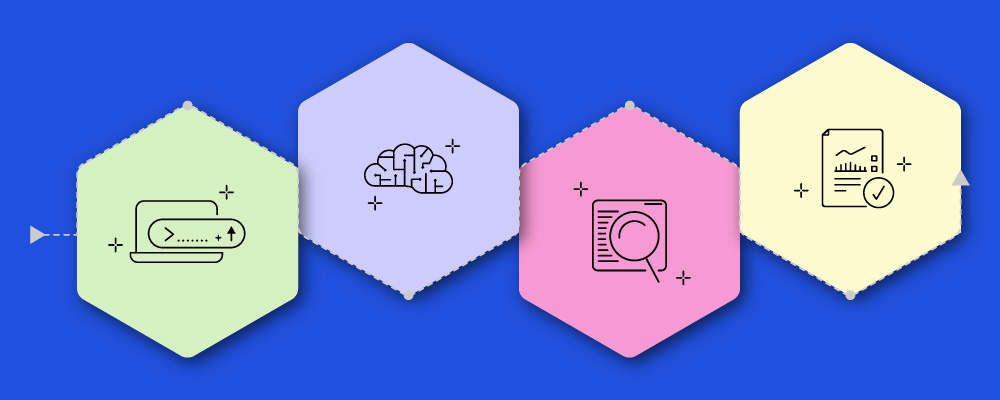
This work has evolved significantly over the past year. What began as internal screening and quality assurance has expanded into a multi-layered system of detection tools, human review teams, metadata checks, industry advocacy, and flexible library-facing controls—all designed to protect collection integrity and uphold transparency.
Human Oversight as a Foundation for Quality

AI detection is not a single switch to flip; it requires constant refinement. Hoopla’s internal review systems combine smart screening workflows with the scrutiny of experienced analysts who understand the patterns, anomalies, and red flags often associated with AI-generated material.
Our detection workflows flag content with unusual sentence structures, questionable author authenticity, abnormal page counts, odd publication patterns, cover art inconsistencies, or other indications that a title may not meet quality standards.
But detection is only the beginning.
Every flagged title is reviewed by real people—analysts trained specifically to evaluate potential AI content. This hybrid approach gives libraries a deeper layer of protection. In January 2026 alone, our teams proactively declined nearly 20,000 titles for being AI-generated or low-quality. These titles never reached your collection, your patrons, or your cataloging workflows.
Enhancing Data Through Partnerships and Advocacy

Because the publishing industry does not yet require standardized metadata for AI-generated eBooks or audiobooks, Hoopla must often work with incomplete or inconsistent data. We onboard thousands of titles every month—more than 75,000 titles in January 2026—and as other digital distribution platforms like Libby/OverDrive and Amazon do, we rely heavily on information provided by publishers.
To support greater consistency, we have established our own data requirements, encouraging partners to identify AI-generated content and to work with authors to maintain transparency. Whenever we reject a title due to quality or AI concerns, we communicate that feedback to partners so they can refine future submissions.
At the same time, we’ve taken on an active advocacy role. We encourage content creators and distributors to adopt clear standards for labeling AI-generated material, and we’re pushing the industry toward stronger, more reliable metadata.
Until those standards become universal, we continue to apply our own quality safeguards—and to keep libraries fully informed.
Tools That Put Libraries in Control
One of the clearest requests we’ve heard from our library partners is the need for transparency and control. In response, we built the Collection Management Tool, available at MidwestTape.com, to give libraries greater visibility into AI-generated or AI-narrated content, as well as formats such as book summaries. This tool allows librarians to view or remove these materials based on their collection policies, and to refine their review by genre, format, license type, or publication date.
The tool uses both publisher-provided metadata and Hoopla-flagged AI signals. And while librarians may occasionally see fewer titles within these filters, that reduction is intentional. We proactively pull and hold suspect titles for additional review long before they appear in a library’s live collection.
For libraries that prefer a broader approach, we offer the option to opt out entirely from all publisher-tagged AI-generated content or to block specific publishers. These configurations are flexible and supported by our customer service specialists.
Rapid Response When Concerns Are Raised

Even with robust safeguards, librarians or patrons may encounter a title that appears low-quality or potentially AI-generated. When that happens, we act quickly.
We validate the concern, investigate the title using both metadata and internal review tools (watching for the aforementioned grammar, phrasing, author, cover art, and page count anomalies), and remove or reclassify it if appropriate. These reports help us strengthen our screening processes and maintain the overall integrity of the platform.
We also encourage libraries to continue using the Collection Management Tool as an ongoing safeguard, allowing local standards to shape local collections.
An Evolving Landscape and an Evolving Approach
AI is not a static technology, and its presence in the publishing world will continue to grow and shift. Our approach will evolve alongside it.
We remain committed to advocating for better metadata and clearer industry practices, enhancing our internal teams and detection systems as the technology advances, and expanding the management tools libraries rely on to curate digital collections with confidence.
Above all, our commitment is to partnership.
We will continue listening, adapting, and supporting libraries through every transition. As emerging formats take shape, we will provide the transparency, visibility, and choice that libraries depend on to serve their communities with trust and clarity.