In the digital age, libraries have adapted to the changing landscape by expanding their collections to include digital audiobooks. Patrons are moving away from borrowing bulky sets of physical discs that need a CD player, opting instead for the more convenient digital audiobooks that can be easily accessed on a phone. These digital versions of audiobooks offer patrons the convenience of borrowing and listening to books from the comfort of their homes, cars or on the go, allowing patrons the unprecedented ability to carry their library in their pocket and allowing libraries to truly meet patrons where they are. However, this convenience comes at a significant cost, posing financial challenges for libraries striving to serve their communities. In fact, libraries are spending a reported 9.2% more year over year on digital audiobook licenses in an effort to meet this growing demand.* This complex and evolving digital landscape is forcing libraries to think differently about their collection development and budget processes.
Unlike physical books, which can be loaned out indefinitely until wear and tear demand replacement, digital audiobook licenses often come with restrictions that limit the number of times a single copy can be borrowed. The average cost of one of these metered licenses for libraries in the United States is $80. According to Hoopla license analysis, metered licenses account for 43% of the licenses being purchased today, with Hachette and Simon & Schuster (two of the Big 5 publishers) opting to only offer metered licenses. Typically, libraries set a 21-day borrowing period for books, meaning a digital audiobook can be loaned out a maximum of 17 times in a 12-month period. This borrowing limitation significantly impacts the cost-effectiveness of one-copy/one-user (OCOU) digital audiobooks, driving the cost per circulation in the first year to a whopping $4.71! After year one, demand typically wanes, causing overall utilization rates on OCOU licenses to dip below 50%. Meaning, $4.71 could be the best possible cost per circ on many licenses.
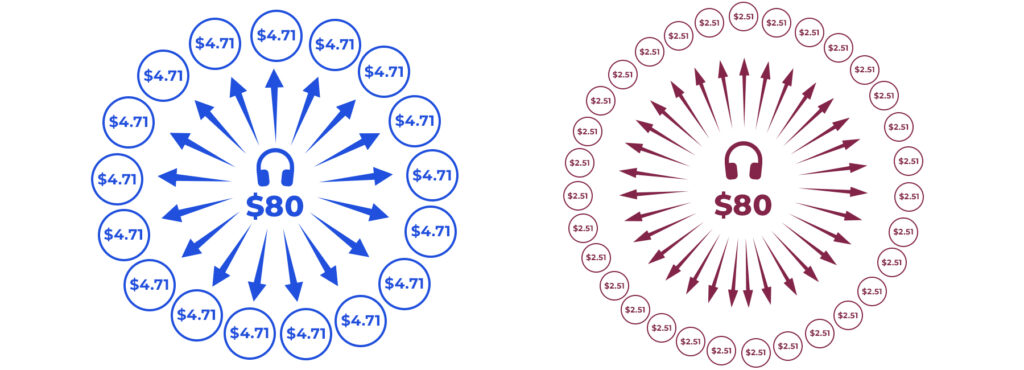

Libraries operate within tight budget constraints, relying heavily on public funding, grants, and donations. The rising costs of digital audiobook licenses strain these budgets, forcing libraries to make difficult decisions about which resources to provide, which titles to purchase, how to set hold-times, and the number of licenses to purchase. Balancing the demand for digital content with the financial realities of maintaining a diverse and comprehensive collection is a constant challenge for today’s libraries. This is where Hoopla can help. Hoopla addresses this constraint by providing solutions to balance the rising costs of metered licenses with the always available Instant (pay-per-use PPU) licenses ensuring optimization of the budget and access to a diverse catalog with depth and breadth. And with Hoopla’s cost per circ being nearly 50% lower than a traditional OCOU license, Hoopla Instant can serve more patrons quicker with no waiting.
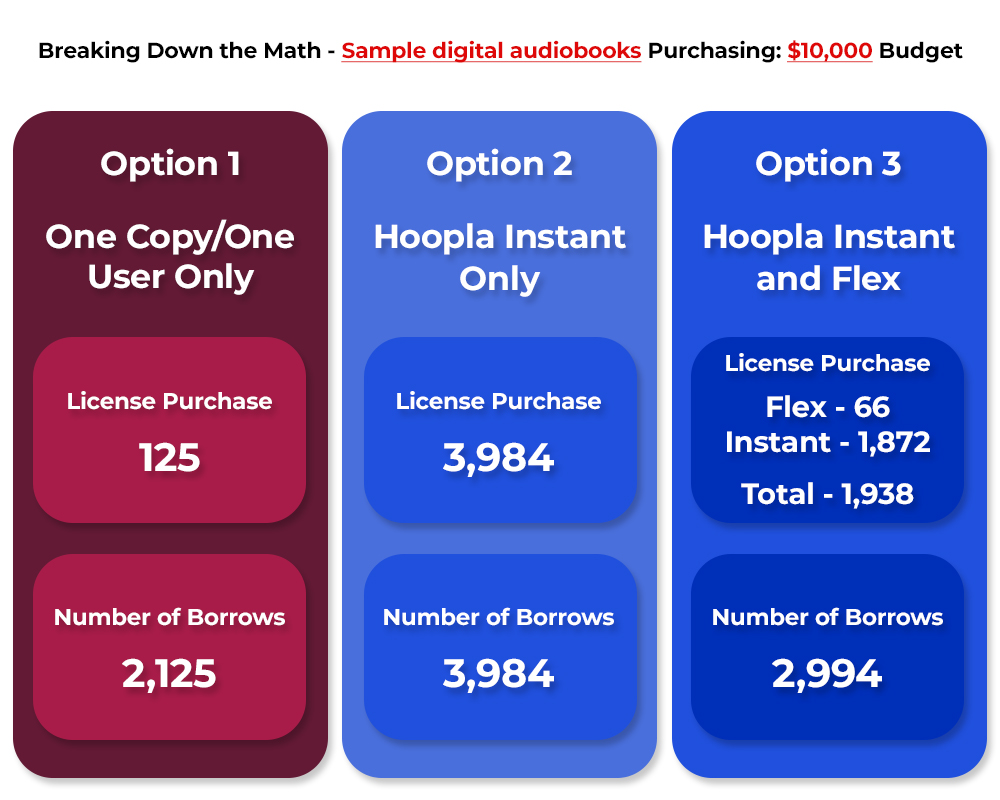
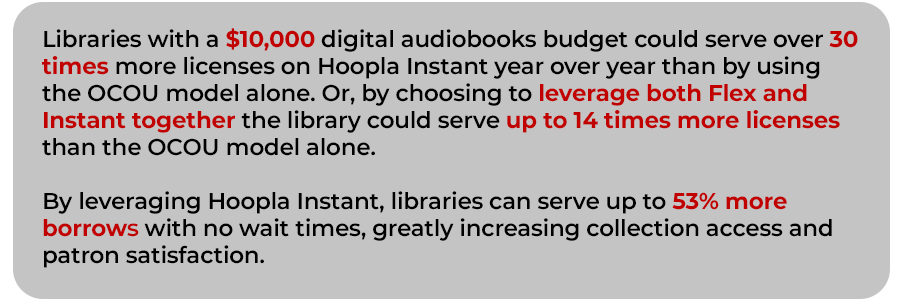
Consider a library with a 2024 digital audiobook budget of $10,000. Given that the average OCOU license cost is $80, a library with a $10,000 digital audiobook budget would only be able to purchase around 125 new licenses with a maximum number of 2,125 available borrows on those titles for that fiscal year. Note that an estimated 53 of those licenses will be metered and will expire within two years. However, serving Hoopla Instant (PPU) with a $2.51 average cost per circ license would allow approximately 3,984 borrows. Nearly 47%** of the digital audiobook licenses purchased today are also available as Hoopla Instant (PPU) licenses and leveraging both Instant and Flex together provides approximately 2,994 borrows. In both scenarios, Hoopla greatly improves the library’s return on investment (ROI) on their $10,000 budget.
The rising costs of digital audiobooks present a significant challenge for libraries striving to meet the evolving needs of their patrons. By thinking differently about traditional collection development workflows, setting digital collection development policies, and creating a robust and flexible long-term digital strategy, libraries can continue to provide valuable resources to their communities without compromising their financial stability. The balance between embracing digital advancements and maintaining fiscal responsibility will be crucial in the years to come as the digital landscape continues to evolve.
*Based on a Library Journal/School Library Journal survey, Fall 2024
**Based on a review of more than 400,000 one copy/one user licenses and the Hoopla Instant collection