Over the last five years, digital media has evolved faster than many library systems were originally built to support. What accelerated during the pandemic has now become everyday behavior, reshaping expectations around instant access, flexible formats, and easy discovery across eBooks, audiobooks, and streaming video. Analysts point to a lasting reset in how people evaluate digital experiences—not a temporary spike in demand.[1][2]
These trends were also discussed on The Straight Download podcast, where the focus wasn’t on individual platforms, but on the broader consumer behaviors shaping library use today. The takeaway was clear: digital demand isn’t going away. It’s the new baseline.[16]
Scale Has Reset Expectations
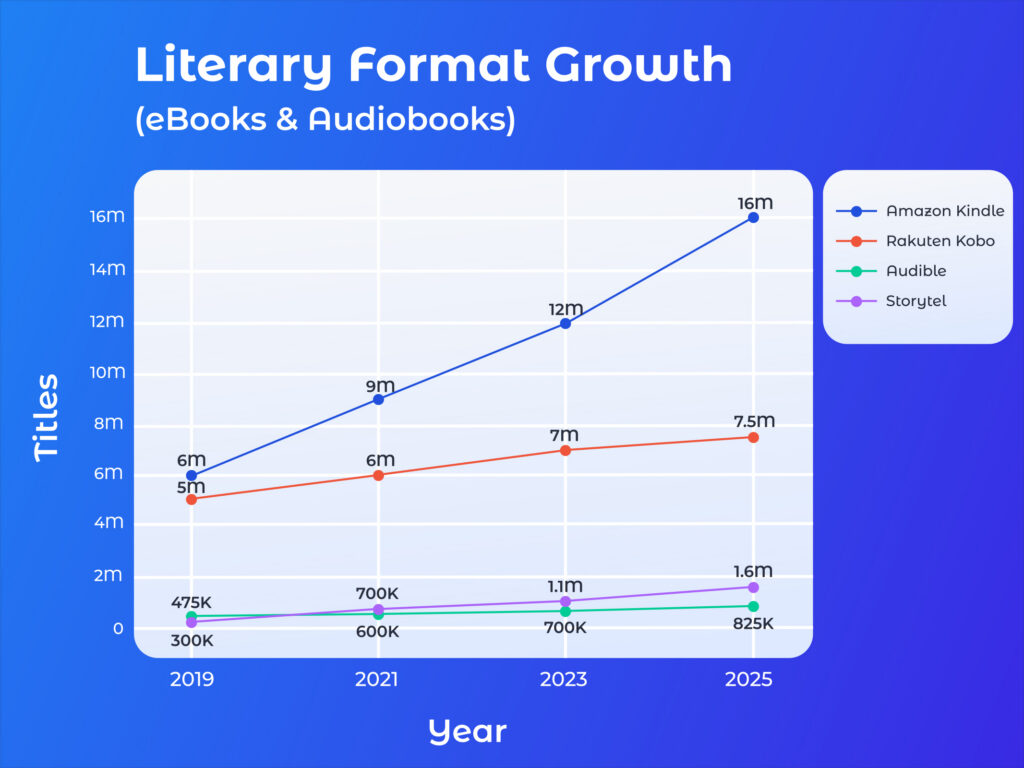
Commercial platforms have expanded digital catalogs at extraordinary scale, and patrons now internalize that abundance as the norm. In the eBooks market, penetration and catalog breadth across major stores have conditioned users to expect deep choice and instant availability; consumers bring those expectations to library apps.[2]
Patrons don’t compare library collections to other libraries—they compare them to the digital services they already use. When discovery feels limited or unintuitive, relevance—not just access—comes into question. Discovery aggregators like JustWatch (and similar tools) exist precisely because search has become fragmented across apps and services.[11][11]
Note on catalog counts: Because there is no reliable public primary source for exact, current Kindle/Kobo/Audible title totals, the article describes “scale” qualitatively and cites market/behavior sources rather than specific numbers. If needed, we can restore numeric counts with explicit attribution to the podcast transcript.[16]
Audiobooks Lead, Costs Follow
Audiobooks have moved to the center of digital reading, with multiple market trackers reporting sustained growth in listening and revenue.[7][8]
For libraries, this popularity creates pressure. Audiobooks are frequently the most expensive digital format and are often offered under metered or time-limited licenses, which contributes to holds and budget fatigue (a dynamic widely discussed in the sector and in policy reporting). If you’d like a public, citable example from a state library policy brief, we can add one to this section.
Discovery Is the Advantage
As subscriptions multiply, consumers increasingly experience search exhaustion. Independent guidance and aggregators (e.g., JustWatch) have grown to help people locate content across services—evidence of how fragmented discovery has become.[11][11]
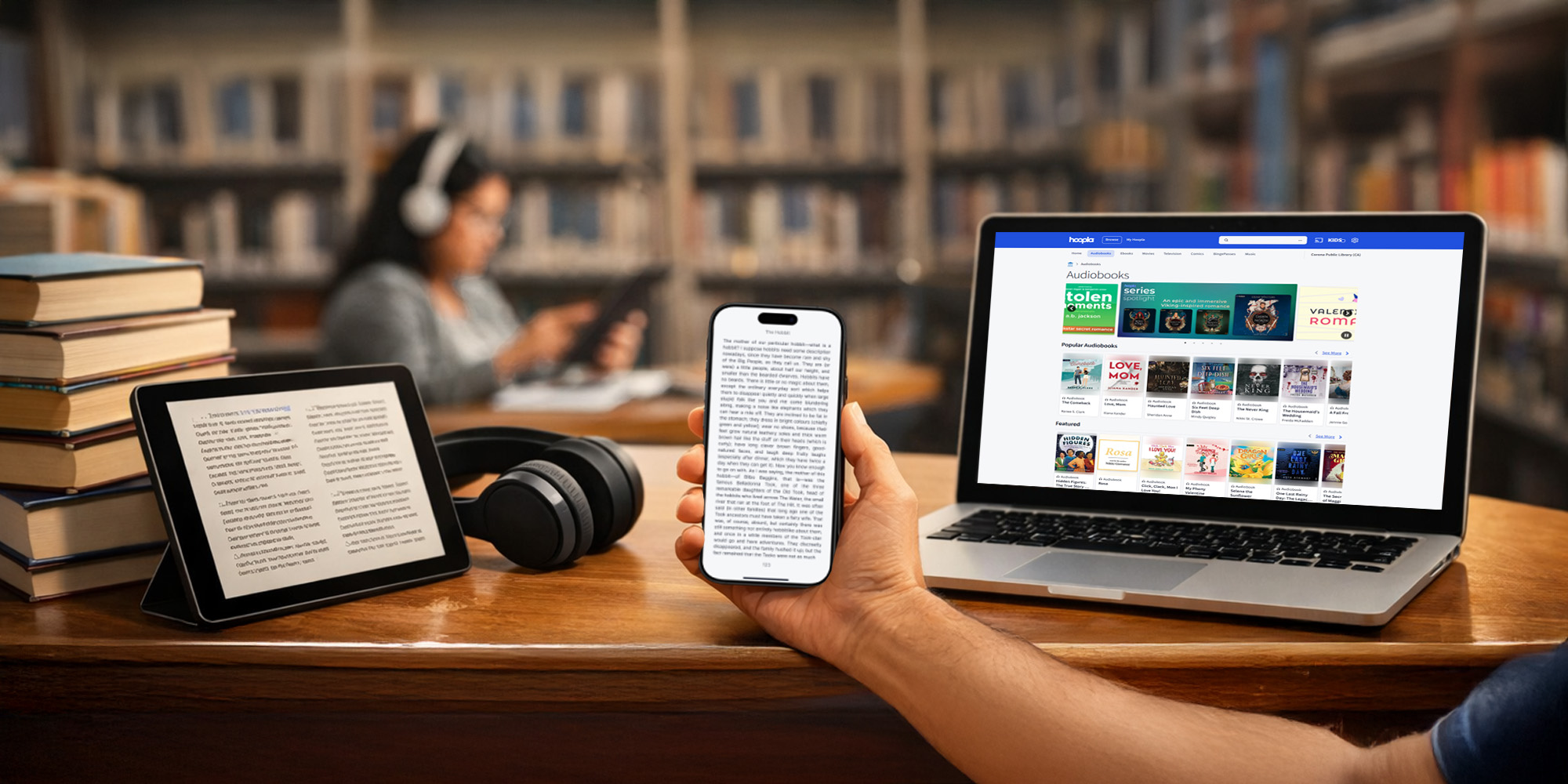
This is where libraries retain an edge. A single, trusted discovery experience—especially when digital services like Hoopla are fully integrated into the library catalog—reduces friction and increases use (a theme echoed in industry coverage and the podcast framing).[16]
Video Growth and the Ad-Free Advantage
Streaming video keeps scaling. Public reporting shows Netflix’s global subscribers exceeded 300 million by late 2024, roughly double the 2019 level—underscoring that streaming is now a default behavior for many households.[7][2]
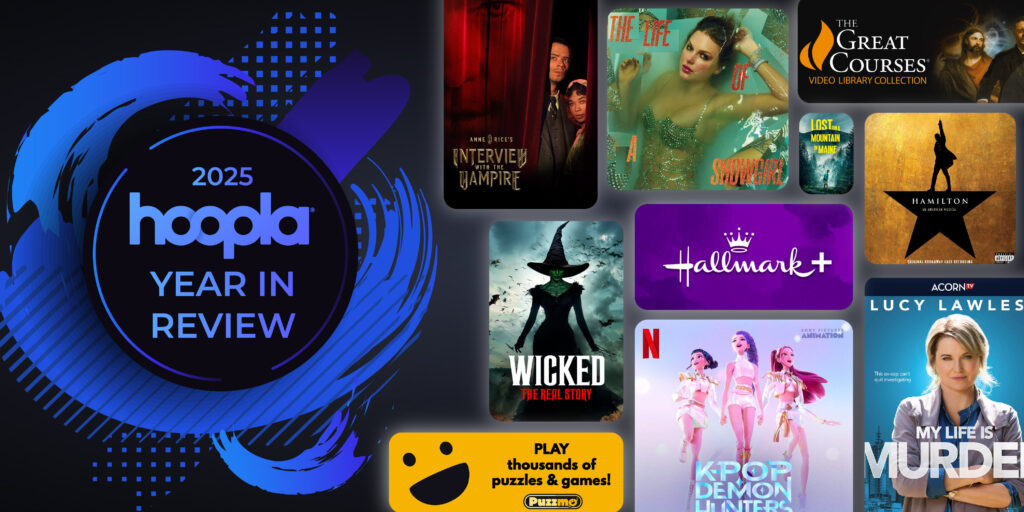
Libraries are seeing parallel momentum. The Straight Download cites +67% growth in new Hoopla video users from 2019–2025.[16] While that metric is internal to the episode, public library posts (e.g., Abilene Public Library) also highlight strong Hoopla adoption and usage growth, reinforcing the direction of travel.[1]
Meanwhile, many commercial platforms are normalizing ad-supported tiers (FAST/FVOD) and bundled subscription hubs. Consumer surveys show ad-tiering drives upgrades but also churn risk, and that users increasingly want one place to manage multiple subscriptions.[6][5]
That creates a sharp contrast libraries can own: ad-free, trusted, community-centered access. As subscription fatigue rises, the absence of ads and commercial noise is a meaningful differentiator.
The Bottom Line
Commercial platforms shape expectations, but libraries continue to meet them with trusted, ad-free access and community-centered value. In today’s digital environment, relevance isn’t about having everything. It’s about making what you already offer easy to find, easy to use, and worth returning to.
What are your thoughts? Connect with your Hoopla account executive if you’d like to continue the conversation.
Footnotes
[1] Abilene, Texas. Dec. 1, 2025. Hoopla Digital sees much success in 2025. City of Abilene.
https://www.abilenetx.gov/m/NewsFlash/Home/Detail/3129 [play.google.com]
[2] Statista Market Insights. Oct. 2025. eBooks: Worldwide.
https://www.statista.com/outlook/dmo/digital-media/epublishing/ebooks/worldwide [digitaljournal.com]
[3] AlixPartners. Dec. 2025. The streaming reset: From growth to profitability.
https://www.alixpartners.com/insights/102i3ap/cutting-the-cord-are-consumers-spending-more-than-ever/ [bango.com]
[4] Author’s Republic. Jan. 12, 2026. Audiobook publishing trends for 2026: Five market trends set to dominate.
https://www.authorsrepublic.com/learn/blog/127/5-audiobook-market-publishing-trends-set-to-d [go.bango-p…yments.com]
[5] Bango. Feb. 2024. Subscription Wars: Super Bundling Awakens (U.S. survey, 5,000 respondents).
https://go.bango-payments.com/rs/054-WXB-933/images/Bango_US_Consumer_Survey.pdf?version=0 [coherentma…sights.com]
[6] Bango. Feb. 20, 2024. Ad tiering pays off as 36% of subscribers level up to avoid ads.
https://bango.com/ad-tiering-pays-off-as-36-of-subscribers-level-up-to-avoid-ads/ [authorsrepublic.com]
[7] DemandSage. Jan. 13, 2026. Netflix subscribers statistics 2026.
https://www.demandsage.com/netflix-subscribers/ [thepoint.online]
[8] Grand View Research. 2025. Audiobooks market size & share: Industry report 2030.
https://www.grandviewresearch.com/industry-analysis/audiobooks-market [businessre…sights.com]
[9] EY. Dec. 17, 2025. 2026 media and entertainment trends: Simplicity, authenticity, and the rise of experiences.
https://www.ey.com/en_us/insights/media-entertainment/2026-media-and-entertainment-trends-simplicity-authenticity-and-the-rise-of-experiences [technotrenz.com]
[10] Intive. Jan. 12, 2026. Media tech trends 2026: Beyond the hype.
https://www.intive.com/insights/tech-trends-in-media-2026 [mordorinte…igence.com]
[11] JustWatch. Compare U.S. streaming service catalogs & prices.
https://www.justwatch.com/us/compare-streaming-catalogs [automateed.com]
[12] Publishers Weekly. June 16, 2025. PW Close-Up: Kanopy wants you to stream smarter.
https://www.publishersweekly.com/pw/by-topic/authors/profiles/article/98006-pw-studio-pw-close-up-kanopy-wants-you-to-stream-smarter.html [abilenetx.gov]
[13] Riverside. Dec. 12, 2025. Podcast statistics and trends for 2026.
https://riverside.fm/blog/podcast-statistics [abilenetx.gov]
[14] Streaming Media. Dec. 18, 2025. Roundup: Streaming industry predictions for 2026.
https://www.streamingmedia.com/Articles/News/Online-Video-News/Roundup-Streaming-Industry-Predictions-for-2026-172903.aspx [go.bango-p…yments.com]
[15] YUDU. Dec. 1, 2025. Digital publishing trends for 2026: What’s next.
https://www.yudu.com/blog/digital-publishing-trends-2026 [bango.com] [16] The Straight Download, Episode 10. 2026. Podcast transcript (PDF). (Internal figure for +67% new Hoopla video users 2019–2025; also used for qualitative discovery framing.) [demandsage.com]