By Storm Hawthorn
Hoopla IDEA Squad Member | Teen Services & Schools Liaison Librarian, East Lansing Public Library

Libraries have always been places where curiosity comes alive.
Today, that curiosity moves seamlessly between shelves, programs, and digital collections. Programs that spark engagement inside the building and then guide patrons naturally toward your online offerings are especially powerful. One format that does this beautifully: the escape room.
Escape rooms blend immersive play, community connection, and digital discovery. They invite patrons to think, collaborate, and explore — and when paired with Hoopla, they become a bridge that extends the hands?on excitement into a related digital experience of books, video, and audio.
What Makes This More Than Just Fun
A thoughtfully designed escape room becomes a hands-on learning environment. Players practice STEM habits of mind as they test patterns, try small experiments, and revise their thinking. They also strengthen communication, problem solving, and collaboration as they share ideas and make decisions under time pressure.
At East Lansing Public Library, we created an escape room based on the adventures of Sherlock Holmes. Sherlock is a perfect thematic fit for libraries because case files, maps, clues, and ciphers feel right at home among shelves and reading rooms. Throughout the experience, the program highlights the Sherlock TV series and related mystery titles available on Hoopla, giving participants a clear way to continue their adventure digitally after the room is complete.
Story Setup: The Case of the Missing Manuscript

The mystery begins when Sherlock delivers the news that someone is after his most prized possession: his violin. He has hidden it for you to find and keep safe. Teams have 45 minutes to follow a coded breadcrumb trail to recover the violin before time runs out.
The story is flexible and fits well in a library setting, allowing clues to be placed in books, displays, cases, or maps without extensive fabrication. What makes the setup especially powerful is that it becomes a spark for further discovery. Patrons leave the room energized and ready to explore Sherlock and other mysteries on Hoopla.
Puzzles Inspired by Sherlock — With a UV Reveal
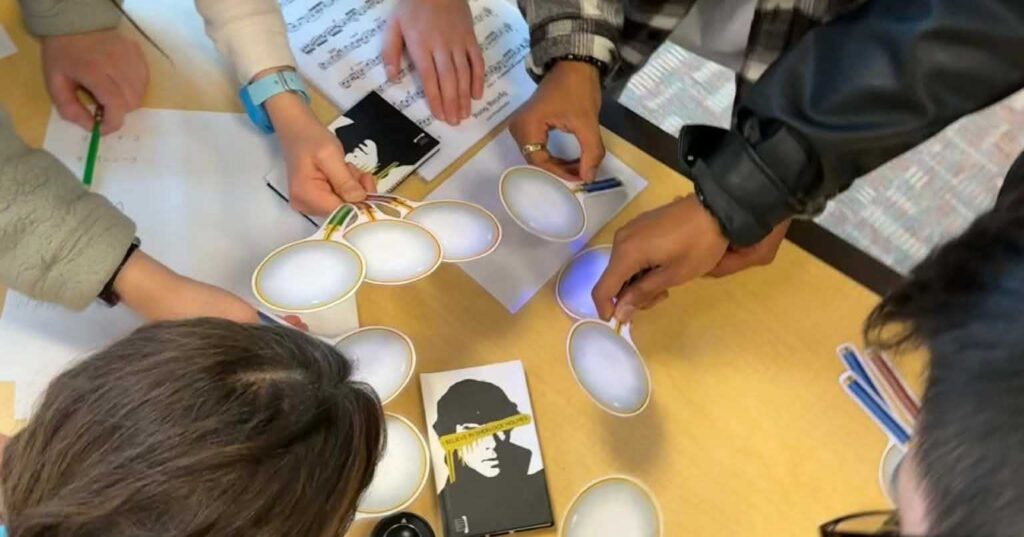
The puzzles echo the spirit of Sherlock Holmes without relying on specific episodes, making them easy to adapt:
- The Sherlock’s Library Cipher puzzle uses book page–line–word coordinates that decode into a lock combination.
- The Music Scale puzzle highlights certain notes from violin sheet music to place into a letter lock.
- The Dewey Deduction riddle guides players to a particular call number where the next clue is concealed.
- A UV-Ink Reveal adds dramatic flair as hidden text exposes an alibi, a location, or a final code.
The room concludes with a lockbox containing the hidden violin (made from paper, cardboard, or a real violin) and a take-home card featuring Sherlock on Hoopla and related mystery suggestions. Each puzzle offers a different cognitive challenge, making it easy for every participant to contribute.
Space, Staffing, and Accessibility
A smooth experience benefits from clearly defined search zones so teams know where clues may be found. A few Victorian-inspired touches — silhouette cutouts, evidence envelopes, or faux case files — create atmosphere without requiring extensive props.
Game Masters monitor play and offer hints, while a Reset Lead quickly prepares the room for the next group. Accessibility remains essential, with:
- Large-print clues
- Minimal color-only distinctions
- At least one logic path that avoids fine motor requirements
These considerations ensure the experience is welcoming for all patrons.
Escaping the Ordinary
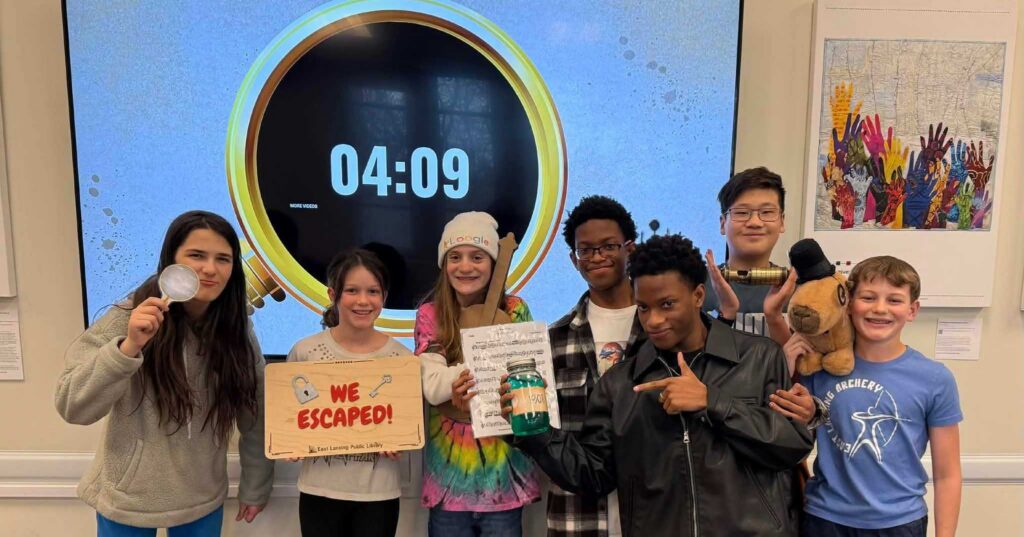
Well-designed escape rooms are more than entertainment; they are joy machines and skill builders. Escape rooms are hands-on learning environments where participants:
- Build confidence as they solve problems under time pressure
- Practice STEM habits of mind through pattern recognition, experimentation, and iteration
- Strengthen communication and collaboration
With Sherlock, the excitement carries from the room into your digital collections as patrons continue exploring mysteries on Hoopla. Programs like this—and many others—that feature digital content turn in-library curiosity into ongoing discovery, creating a win for patrons and a win for the library.
*Titles may vary by library