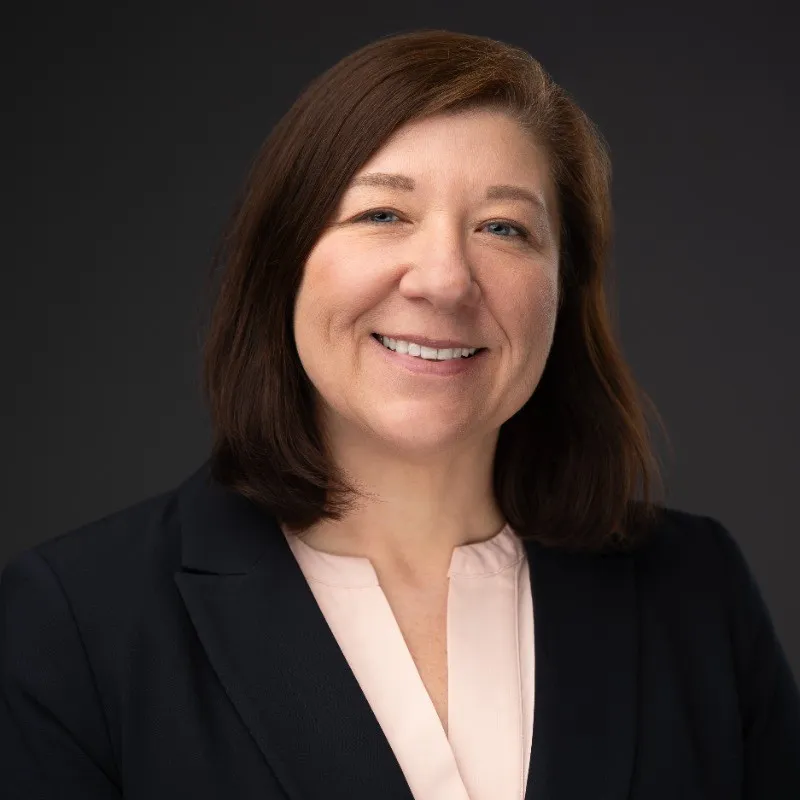
By Ann Ford, VP of Global Library Partnerships, Midwest Tape | Hoopla
I was sitting in the BEXCO Auditorium in Busan, South Korea, surrounded by delegates from over 100 countries, when it hit me: this is what our profession looks like when you pull the camera all the way back. The 90th IFLA World Library and Information Congress (WLIC) had just opened under the theme “Libraries Powering Transformation,” and IFLA was returning to South Korea for the first time since Seoul hosted the Congress two decades ago. Three thousand-plus librarians, researchers, policymakers, and partners, all in one room, all working on some version of the same question: what does a library need to become next?
If you’re not familiar with IFLA, the International Federation of Library Associations and Institutions, think of it as the one place on earth where the entire library field shows up at once. Its annual World Library and Information Congress moves from country to country, and it is, without question, the most strategic week I have spent in this profession.
I say “strategic” on purpose, because that’s not usually the word people reach for when they describe a conference. But session after session in Busan wasn’t about inspiration for its own sake, but rather, it was about action. In one room, I watched representatives from the National Library Board of Singapore, Qatar National Library, the German National Library, and the U.S. Library of Congress compare notes on AI bots crawling their digital collections hard enough to strain their own infrastructure, a problem none of them can solve alone, and one most U.S. public libraries haven’t even had to think about yet. In another, IFLA’s own President’s Session put generative AI’s promise and its very real risks in front of the entire field and asked us to argue it out in real time. In a third, librarians from Toronto Public Library, the University of Alabama, a national project in Finland, and the National Library Board of Singapore traded actual measurement frameworks for proving library impact. This wasn’t theory, but actual tools that could be replicated and shared to help libraries measure impact in the digital age.
That pattern held all week. In a session called “Leading Library Associations Through Uncertain Times,” leaders from Germany’s national library association, from libraries across the Middle East and North Africa, and from the Korea Library Association compared how they’re steering their organizations through political and financial pressure that will sound uncomfortably familiar to anyone running a library association here in the U.S. right now. And in one of the most moving sessions I attended, “Advocacy, Collaboration, and Transformation,” I heard from a Lebanese librarian who helped build a 150-hour training program pairing librarians with soldiers and civil defense teams after the 2020 Beirut port explosion, from academic librarians in South Africa fighting for a seat at their own institution’s table, from a British Library team digitizing Lesotho’s national heritage, and from a Chilean librarian using digital and AI literacy to rebuild public trust. Different countries, different budgets, wildly different starting points, and yet every single one of them was solving a version of a problem I recognized.
There was plenty to celebrate, too. The IFLA/James Bennett Public Library of the Year Award put four shortlisted libraries on stage: Library+ Caloundra in Australia, the Mesa Gateway Library in Arizona, the West Las Vegas Library, and China’s Xiongan Library. Each one positioned a genuinely different answer to “what can a public library building do for its community?” It’s the kind of benchmark that’s hard to get from reading a report.
But here’s the part I actually can’t put a number on. Before the Congress even opened, there were caucuses, informal gatherings by country and region, where U.S. delegates, U.K. delegates, and Australia/New Zealand delegates found each other in a hotel lobby or a conference room and started talking before badge scanning had even begun. By the closing I wasn’t thinking about sessions anymore. I was thinking about the colleagues from a dozen countries I now have on speed dial, and the sense that this profession is bigger, more connected, and more capable than any one system, association, or country. That’s the value that doesn’t show up on a budget line, and it’s the value that changes how you lead when you get home.
One of my biggest takeaways from the entire week was just how eager that delegation was to make those connections. It wasn’t incidental. People were actively seeking each other out, comparing notes, and forming partnerships and alliances that will outlast the week itself. That spirit of collaboration showed up in every session, every hallway conversation, every caucus. And it made me think about the librarians here at home who feel like they’re facing their hardest challenges alone, quietly carrying problems they assume no one else could understand. Here’s what a week in Busan reminded me: somewhere in that global network is a colleague who has faced your exact challenge and found a way through it. You don’t have to suffer in silence with it. A ready ally is waiting for you at IFLA. You just have to go find them.
So here’s my ask: if you run, work for, or simply care about a U.S. public library, put IFLA on your radar. Take a look at what institutional membership could look like for your library at ifla.org. And if your institution isn’t in a position to join right now, join anyway as an individual, on your own behalf, for your own professional development. I met more than a few librarians in Busan who were there entirely on their own dime and their own time, because they understood something worth understanding: the value of that week isn’t tied to your library’s budget line, it’s tied to you and what you bring back to your community. And start planning now for WLIC 2027. It’s headed to London, August 9–13, 2027. You can follow along and learn more at the official WLIC 2027 congress site. I promise you, the week will change how you think about what’s possible for your library and remind you that you’re not building it alone.
I’ll be sharing more reflections and a few specific ideas U.S. libraries can borrow right now on the next Continuing the Conversation webcast. I hope you’ll join me.